

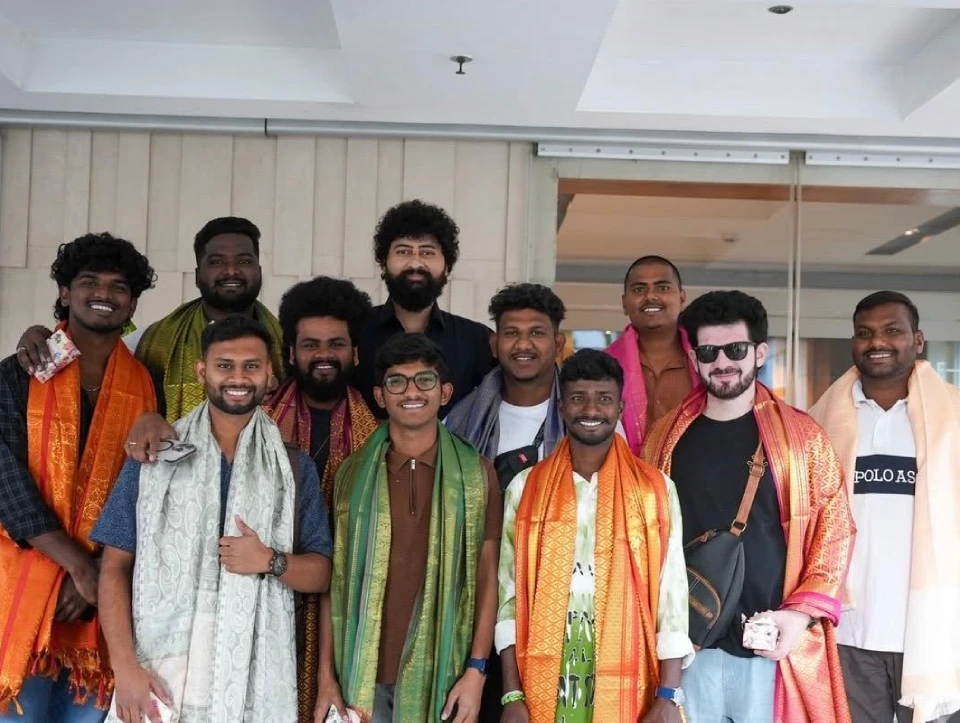
A Journey of Learning: South India Educational Tour by Dr. Sai Ratan
Travel is often seen as relaxation, exploration, or a temporary escape from routine life. But sometimes, a journey can become something far more meaningful — a platform for learning, awareness, and real-world understanding.
That was precisely the vision behind the unique South India journey organized by Dr. Sai Ratan. What appeared to be a travel program was, in reality, an immersive educational experience designed to help participants understand society, governance, culture, and development beyond textbooks and social media debates.
This was not tourism.
It was learning through experience.
The Idea: Learning from the Ground, Not Just the Screen
In today’s digital world, discussions about politics, governance, and development are everywhere — especially on social media. Yet, most of these conversations happen without firsthand knowledge of how systems actually function.
Dr. Sai Ratan recognized this gap.
His idea was simple yet transformative:
Instead of discussing systems from a distance, why not observe them directly?
To bring this idea to life, he organized a carefully planned educational travel initiative that brought together a diverse group of individuals from Telangana.
The group included:
- Social media influencers
- College students
- Individuals connected to agriculture and rural life
Each participant brought a unique perspective and audience. But they all shared a common objective — to understand how different regions function and to carry those lessons back to their communities.
The Journey Begins: From Hyderabad to South India
The journey began in Hyderabad, where participants gathered and discussed the purpose and vision of the trip.
From there, the group travelled across several culturally and economically significant regions of South India, including:
- Tamil Nadu
- Mahabalipuram
- Pondicherry
- Ooty
- Bangalore
Each destination was chosen not only for sightseeing but for the insights it could provide about governance, culture, economics, and society.
Every stop along the route became a chapter in a larger learning experience.
Understanding Politics Beyond Debates
One of the most distinctive aspects of the journey was the political awareness sessions conducted by Dr. Sai Ratan during travel.
Rather than presenting politics as ideological debates, he explained it as a practical system that directly shapes everyday life.
During discussions, he explored topics such as:
- How development projects are planned by state governments
- How funds move from central to state administrations
- The functioning of local governance systems
- The role of policy decisions in agriculture, infrastructure, and employment
For many young participants, especially college students, this was the first time politics was explained in such a structured and practical manner, far removed from the noise of online debates.
Economics on the Road: Understanding How Money Moves
Another important dimension of the journey focused on understanding economic systems within states.
Dr. Sai Ratan explained how financial planning influences development and how governments manage economic resources.
Participants learned about:
- Government financial flows across departments
- How infrastructure projects are funded
- The economic impact of tourism
- The role of businesses in regional development
These discussions helped the group see the deeper connection between governance, economic planning, and societal growth.
Agriculture: Lessons Across Landscapes
The journey also became an eye-opening experience for participants connected with agriculture.
Many participants came from Telangana, where they were already familiar with local farming practices. However, traveling through different South Indian regions allowed them to observe how agriculture adapts to diverse climates, policies, and water resources.
Key discussion points included:
- Differences in crop patterns across regions
- Irrigation systems and water management
- Government agricultural support programs
- Market access and economic opportunities for farmers
Dr. Sai Ratan connected these observations with policy decisions and environmental conditions, helping participants understand how agriculture functions as part of a broader economic ecosystem.
Mahabalipuram: Where History Speaks Through Stone
One of the most memorable moments of the journey took place in Mahabalipuram, a historic coastal town in Tamil Nadu known for its ancient temples and stone carvings.
As participants explored the centuries-old monuments built during the Pallava dynasty, the location transformed into a living classroom.
Dr. Sai Ratan explained:
- How rulers used architecture to express political power and faith
- The historical trade networks of South India
- The modern economic value of cultural heritage through tourism
Mahabalipuram became more than a historical destination — it became a powerful reminder of how history continues to shape the present.
Pondicherry: Where Cultures Meet
The journey then moved to Pondicherry, a coastal town where Indian and French influences blend beautifully.
Walking through its distinctive streets and colonial architecture, the group explored how history shapes culture and identity.
Discussions included:
- The influence of French colonial rule
- Changes in urban planning and architecture
- Tourism development
- Cultural integration over time
Pondicherry offered participants a fascinating example of how global interactions and historical events influence modern societies.
Ooty and Bangalore: Two Faces of Development
From the coast, the group traveled to the scenic hills of Ooty, where discussions focused on environmental sustainability and tourism-driven economies.
Later, the journey continued to Bangalore, India’s technology powerhouse.
The contrast between the two places was remarkable.
Dr. Sai Ratan explained how:
- Technology industries transform urban economies
- Startup ecosystems generate innovation and employment
- Infrastructure and policies support technological growth
Experiencing both Ooty and Bangalore helped participants understand how different economic models drive regional development.
A Journey That Became a Classroom
What made this initiative truly unique was its purpose.
It was not designed as a vacation.
It was designed as a moving classroom, where every destination became a learning opportunity.
Through discussions, observations, and real-world experiences, participants gained insights into:
- Politics and governance
- Cultural diversity
- Economic systems
- Agricultural development
- Regional policy impacts
Throughout the journey, Dr. Sai Ratan continuously simplified complex systems so that everyone could understand them.
His mission was clear:
Knowledge should not remain confined to books or debates — it should be experienced, understood, and shared.
